Stored product pest remediation addresses specific beetle and moth species that reproduce inside sealed or unsealed dry goods, including milled grains, pet food, birdseed, and dried legumes. In Williston, severe…
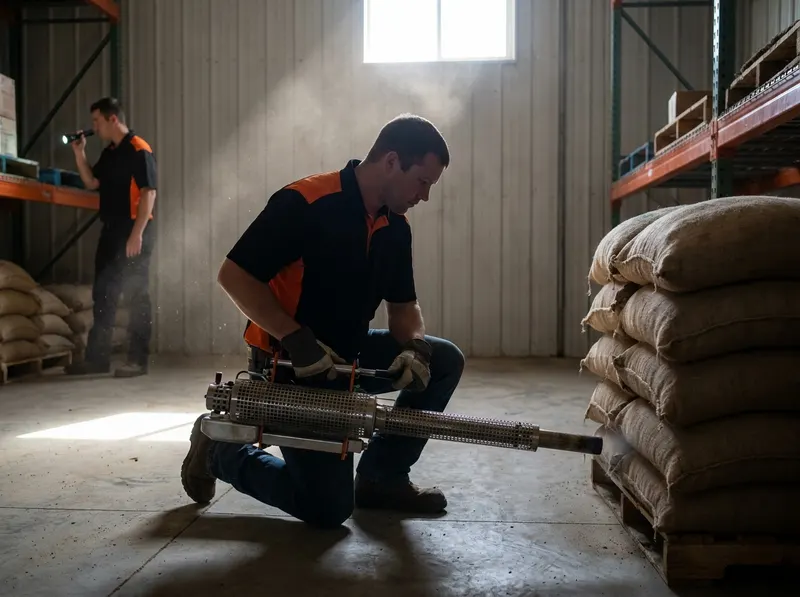
Stored product pest remediation addresses specific beetle and moth species that reproduce inside sealed or unsealed dry goods, including milled grains, pet food, birdseed, and dried legumes. In Williston, severe sub-zero winters drive indoor heating systems to run continuously, elevating ambient indoor pantry temperatures above 70 degrees Fahrenheit. These conditions accelerate the life cycle of Indian meal moths and sawtoothed grain beetles from egg to adult in 30 to 45 days. Properties in eagle crest, Harvest Hills, and workforce housing units along the Bakken Cabins corridor encounter high-volume bulk food stockpiling, which provides sheltered breeding grounds if contaminated packaging enters the pantry. Remediation stops reproduction at the source rather than relying on surface sprays, which fail to penetrate enclosed product packages.
The service sequence removes the active breeding matrix through detailed extraction, crack-and-crevice cleanouts, and targeted residual applications using insect growth regulators. A standard pantry cleanout fits residential properties experiencing active moth flight or beetle larvae in single cupboards, whereas whole-property containment addresses multi-unit living spaces such as modular crew housing near Sand Creek, Wilshire, and Downtown Williston where shared ventilation and wall voids harbor secondary populations. The technical trade-off involves product disposal versus chemical intervention: chemical applications cannot be placed directly onto edible food, meaning all infested dry goods must be bagged in 3-mil polyethylene sheeting and discarded to guarantee biological disruption.
Technicians inspect adjacent utility rooms, attic access points, and basement dry storage near Spring Lake Park and Fox Run where rodent activity frequently cross-contaminates cached seeds. Stored product remediation operates without mandatory monthly contracts, resolving infestations in 1 to 2 targeted visits combined with pheromone monitoring traps. Structural voids are vacuumed using HEPA filtration systems to extract shed skins, frass, and pupal cases from behind baseboards. Treatments utilize non-volatile formulations that permit household pets and residents to re-enter treated rooms once localized applications dry, typically within 2 hours of completion.
Every job gets a firm, written price after a free on-site visit.
Tell us about your stored product pest remediation job in Williston and we'll send a clear, written quote, usually the same day.
 Nolvexa Pest Solutions