Subterranean termite activity in northern North Dakota concentrates along heated foundations, insulated basements, and utility entry corridors where soil temperatures remain elevated through sub-zero winters. While…
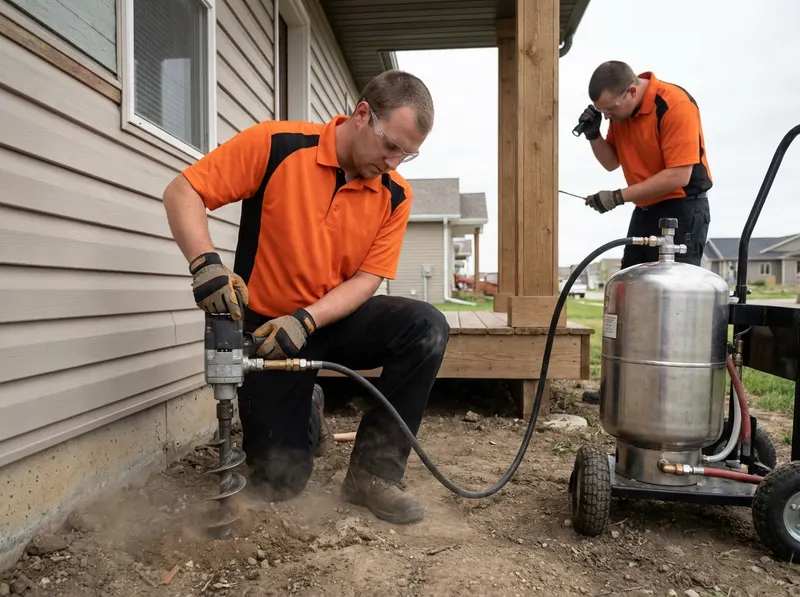
Subterranean termite activity in northern North Dakota concentrates along heated foundations, insulated basements, and utility entry corridors where soil temperatures remain elevated through sub-zero winters. While surface soils in Williams County freeze several feet deep, subterranean colonies survive below the frost line and exploit heated stem walls in areas like Harvest Hills, Eagle Crest, and Fox Run. Properties built with slab-on-grade construction or modified crawl spaces, common in Bakken Cabins and temporary workforce quarters, remain vulnerable where framing timbers contact or sit within 6 inches of grading.
Treatment protocol requires establishing a continuous chemical barrier in the soil around the exterior foundation footprint. Technicians trench soil along exterior footings to a depth of 6 inches and rod the substrate adjacent to foundation walls using non-repellent termiticides such as fipronil at a label-directed rate of 4 finished gallons per 10 linear feet per foot of depth. In structures with interior finished basements or attached garages common in Sand Creek and The Timbers, slab injection requires drilling half-inch holes spaced 12 inches apart through concrete to saturate soil beneath expansion joints. This eliminates the colony via social transfer rather than acting as a repellent boundary that bugs simply detour around.
1. Structural diagnostic: The technician tests load-bearing framing, probes band joists, inspects crawl-space piers, and maps active mud tubes.
2. Barrier application: Soil trenching, rodding, or interior slab drilling delivers non-repellent termiticide to reach the foundation footing line.
3. Post-treatment verification: Treated drill holes are patched with structural hydraulic cement, and monitoring stations monitor long-term clearance.
A visual termite inspection confirms active presence or wood damage, providing the required documentation for real estate transactions, but it does not stop termite movement without trenching or bait station installation. Conversely, a comprehensive perimeter liquid treatment halts subterranean colonies for years, though it carries a higher upfront material cost. Homeowners dealing with seasonal moisture around plumbing penetrations near Downtown Williston or Wilshire receive definitive diagnostics before committing to full-scale drilling operations.
Every job gets a firm, written price after a free on-site visit.
Tell us about your subterranean termite treatment & inspection job in Williston and we'll send a clear, written quote, usually the same day.
 Nolvexa Pest Solutions